

Interactive display games can play a significant role in facilitating recovery for stroke patients by engaging them in enjoyable and therapeutic activities that target various aspects of physical and cognitive rehabilitation. Ou games have the potential to revolutionize stroke rehabilitation by providing a versatile and engaging platform for addressing physical, cognitive, and emotional needs. By incorporating these games into rehabilitation programs, therapists can create customized and holistic interventions that maximize patient engagement, motivation, and recovery outcomes.
Here’s how:
- Motor Skills Rehabilitation: Many interactive display games require physical movement, such as reaching, grasping, and manipulating objects on the screen. These activities can help stroke patients improve motor skills, coordination, and range of motion in affected limbs. For example, games that involve virtual reality-based exercises or motion-tracking technology can encourage patients to perform repetitive movements in a fun and engaging manner, promoting neuroplasticity and motor recovery.
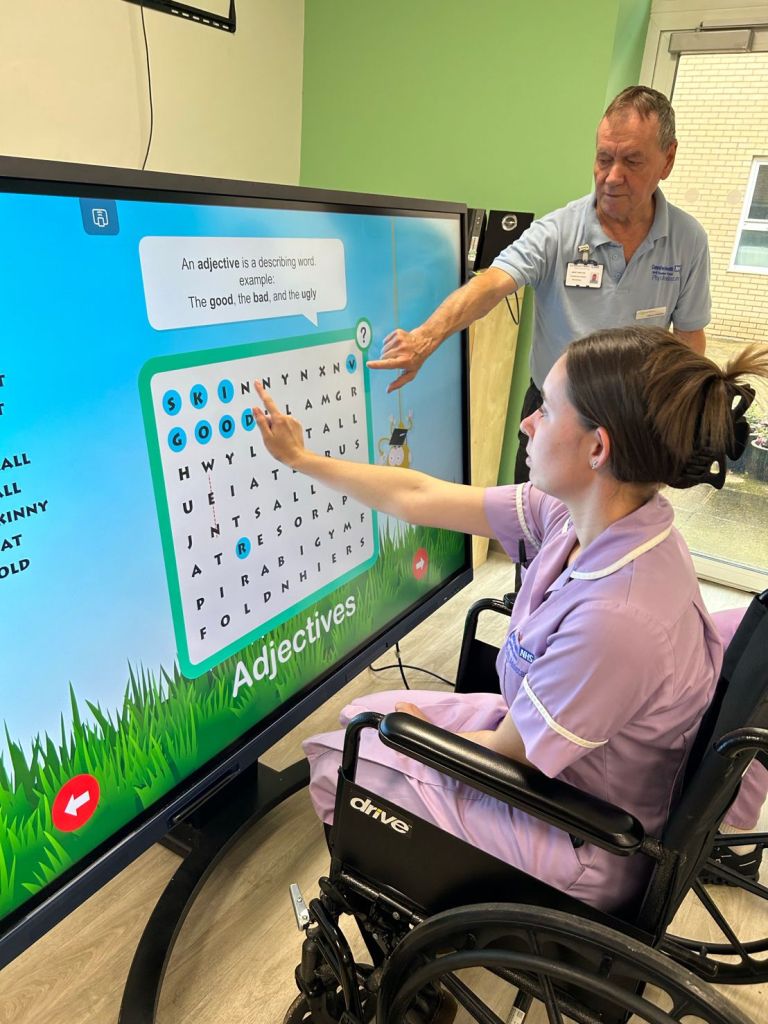
- Cognitive Stimulation: Stroke survivors often experience cognitive impairments, such as memory loss, attention deficits, and executive dysfunction. Interactive display games can provide cognitive stimulation by challenging patients to solve puzzles, complete tasks, and engage in decision-making activities. These games can help improve cognitive functions such as attention, memory, problem-solving, and visual-spatial skills, thereby enhancing overall cognitive performance and facilitating recovery.
- Balance and Coordination Training: Balance and coordination deficits are common among stroke survivors and can significantly impact mobility and independence. Interactive display games that incorporate balance boards, motion sensors, or virtual reality simulations can be used to provide targeted balance and coordination training. These games can encourage patients to practice weight shifting, postural control, and dynamic balance tasks in a safe and controlled environment, helping to improve balance, stability, and gait function over time.
- Motivation and Engagement: Traditional rehabilitation exercises can be repetitive and monotonous, leading to boredom and disengagement. Interactive display games offer a more engaging and motivating alternative by providing real-time feedback, rewards, and incentives for performance. By making rehabilitation activities enjoyable and rewarding, these games can increase patient motivation, compliance, and adherence to therapy programs, ultimately leading to better outcomes and faster recovery.
- Social Interaction and Emotional Well-being: Stroke recovery can be a challenging and isolating journey for many patients. Interactive display games that incorporate multiplayer or social gaming features can promote social interaction and connectedness among patients, caregivers, and therapists. By fostering a sense of community and camaraderie, these games can help reduce feelings of loneliness, depression, and anxiety, improving overall emotional well-being and quality of life during the recovery process.
interested to find out more?
Our Touchscreen learning game used for cognitive rehabilitation:
 Touchscreen Learning | Software & apps for tablets, iPad & classroom displays